Friday, 13 May 2011

Musings under a blue moon that's rising

In the course of a massively important week on the football front, I've found myself musing, not for the first time, on the whole business of being a fan.

Not on being a fan of the game in general, but on being a fan of a particular club. Note that I didn’t say ‘team’, because the team changes. What we attach ourselves to is the club and whatever that club represents for us.

I have vague memories of nailing my colours to Manchester City’s mast. It was the early ’70s and my new school (all girls) was divided along sporting lines. You either liked speedway or football and, if the latter, then it was City or United. For some reason, I plumped for the Blues.

My mother had little interest in football, preferring rugby league and cricket – her sole concession being a soft spot for Liverpool when they’re winning.

My father is a lifelong Plymouth Argyle fan. During his training for the church, he lived in both London and Manchester, and watched Arsenal, Tottenham, City and United.

So my own allegiance didn’t come from any family commitment.

My choice itself – which followed brief spells as a Chelsea fan (when we lived in west London as the ’60s came to a close) and later as a Leeds fan during the Revie days – holds no surprise for me.

What does surprise me, even now, is how that has lasted; how it has stuck with me, when so little else of my past has stuck. But I could no sooner change that allegiance now than I could the colour of my blood. In fact, dying my blood would probably be easier.

There have been moments – more than a few – where I’ve declared myself finished; that I’ve had enough of watching ‘typical Citeh’ – a well-worn complaint as, over decades, we developed a capacity to snatch defeat from the jaws of victory (or at least a draw).

It’s been more than an ability – a psyche, rather, of failure and low expectation that seemed to infect the entire club and every player who ever pulled on the sky blue shirt. If we went a goal down, you could walk out in the sure knowledge that heads would drop and we'd have no chance of getting back into the contest.

And yet in the face of such consistent failure and disappointment for 30-odd years, there was no mass desertion of the club, but a development amongst the faithful of a self-deprecating, gallows humour – and the sort of total bonkersness that revealed itself years ago when inflatable giant bananas were first waved above the terraces at Maine Road, and now has a new form in the Poznan.

This was learnt from Polish team Lech Poznan when they visited Eastlands last autumn for a Europa Cup tie.

In essence – well, this is what the instructions on my t-shirt say – turn around, link up with the people on either side of you and “bounce”.

At Wembley last month, shortly before the semi-final against Manchester United, the teams were being announced over the tannoy.

As the nominally ‘home’ side, the Blues team was named first.

We applauded and cheered, as is the norm. But the norm also usually means booing the opposition players when they’re named.

Something else happened. I don’t know how, but it was almost as though it was the result of a mass telepathic episode: we turned our backs on the stadium, put our arms around our neighbours’ shoulders and, as one report put it the following day, “turned Wembley into a blue bouncy castle”.

The United fans booed. They stopped cheering their own players and booed us. In retrospect, it was the first psychological battle of the day – and we’d won it.

We did it again, later, after Yaya scored and after the final whistle. The players and coaching staff did it too as we celebrated.

If Manchester is a party city, then City can be a party club.

And if you think the Poznan sounds mad, then it gets madder when you realise that, as a shortarse between two very tall blokes, my little feet were pretty much off the floor for the entire time that we bounced.

I’d seen City at Wembley before, in May 1999, when we – very unusually at the time – managed to snatch victory from the jaws of almost certain defeat in the Division II play-off final, going from 2-0 down against Gillingham, with just six minutes left on the clock, to 2-2 after a remarkable six minutes of ‘Fergie time’, and then winning on penalties after extra time produced no goals.

It was in my days as a sports hackette, so I was in the press box: no colours, no shows of emotion; everything that I was feeling hidden under the desk as my legs couldn’t stay still, while I attempted to make professional notes above it.

When Nicky Weaver saved the final penalty, at least two thirds of the press box were revealed to be Blues in disguise. At the end of my row, an elderly man in a flat cap and raincoat suddenly hauled open his mack to reveal a City scarf.

The young man next to me – I have no idea who he was – jumped up and we hugged. It was crazy. Later, I slipped into the ladies, changed into a City t-shirt and marched down the road until I hit a bar, overflowing with fans, where I was welcomed as one of the family. It was rather late that night when I eventually wended back home.

On Tuesday night, we came out on top at the end of a cagey encounter with Tottenham, guaranteeing us a place in next season’s Champions’ League for the first time in the club’s history.

Tomorrow afternoon, we're back at Wembley to play Stoke City in the final of the FA Cup.

I can barely think about that: we’ve not won a pot since 1976 and I’m light years from being overly confident. It’ll be a tough, tough game against very difficult and competent opponents, who’ll want it every bit as much as we do.

It’s highly unlikely that I’ll be there in the flesh. All hope has not quite been extinguished – I’m still clutching some straws – but the ticket allocation from the FA for the match was 10,000 less than for the semi-final – and for some reason, Stoke have received a larger ticket allocation, even though they have fewer season ticket holders than we do.

I’ll certainly be there in spirit, though – and possibly watching somewhere with other fans, where we can ‘do the Poznan’ if the opportunity arises. A City-supporting friend told me today that, on Tuesday night, he had a text from a friend who'd been watching in a pub and doing the Poznan all on his own. Did I tell you we were mad?

In the last decade or so, I’ve shed labels and badges, and refused to be locked into any pigeon hole. The only tribe that I happily declare myself part of is City.

I arrived at the stadium for the semi-final early and decided that, rather than stand outside for an hour, I’d get through the gate and have a drink in one of the bars inside.

As soon as I’d got a beer in my hand, I was ‘adopted’ by other fans. It is extraordinary, this sense that on some strange level, we’re a sort of vast family.

I’d been incredibly nervous, but the atmosphere eased me. By the time I took my seat, I was more relaxed – and had realised something more than ever before: I had a role to play, a responsibility, as we all did, to be that 12th man for the players on the pitch.

I’d never felt that so strongly before. Of course, winning makes everything feel better, but it was a glorious day and experience.

And one of the things that that attachment to a club gives you is the chance to let off steam in a way that is not particularly the norm in our society these days. I was hoarse after the semi, but a sense of relaxation lasted for days.

Whatever happens tomorrow, there’s a blue moon rising. My eyes were a little moist at the end of Tuesday night’s game. I have no idea, if we lift the FA Cup tomorrow, just how I’ll react, but – fingers crossed – it could be fun finding out and I make no promises that it wouldn't be bonkers.

Sunday, 8 May 2011

The joy of a good spring roast

Is there anything much better suited to a Sunday dinner at this time of year than roast lamb?

There’s that wonderfully reassuring sense of a roast, while the season offers plenty of wonderful accompaniments on the vegetable front.

For the last few weeks, I’ve been wanting to do a big spring roast. But for various reasons, it’s not been possible.

At Easter, when it would have felt so apt, we were going away so shortly after the Sunday that there was no point in buying a big joint for the two of us.

Last week, neither of the butchers who I could have bought lamb from were at Broadway Market, since it was another bank holiday weekend. I had to settle – oh, woe is me! – for a piece of brisket, which was perfectly good.

But it wasn’t lamb.

This weekend finally presented the perfect opportunity.

I picked up a leg from Henry Tidiman, the local butcher and one of the very few traders to have survived the bad times until the revival of the market.

A hulking piece of meat, it weighed in at 2.438kg – thank goodness I’ve finally got scales that can deal with more then 900g.

For something like this, Delia always does the business with basic cooking instructions.

Adjusting for my fan oven, her ever-reliable instructions start with half an hour at 190˚ and then 30 minutes per 450g at 160˚.

And that was the end of the specific book use.

I took a load of fresh rosemary, mint and flat leaf parsley, plus three cloves of garlic, and blitzed it all, adding some salt and then some olive oil to bind it together.

Once that’s done, slap it on the meat – okay, not so much a ‘slapping’, as a rather more careful business, but you get the gist.

Into a big roasting tin went the meat, with a little cold water the logic of that being that it would help to create a nice jus. And then into the oven it went.

I have no head for maths, and a notebook page was needed to scrawl down the calculations for cooking times.

After half an hour, the temperature was reduced. Then it got two and a quarter hours. During that time, a few Jersey Royals were scraped and par-boiled (15 minutes).

When the time was up, four new carrots and four baby turnips (wiped) were added to the roasting tin, together with a slug of vermouth.

Half an hour after that, the meat came out for resting, and potatoes, a couple of artichoke hearts and a few asparagus tips were added and the tin placed back in the oven for a further 10 minutes.

After that, the only thing left (apart from carving, which was a doddle), was to pour all the juices and liquid into one of those fat separating jugs and drain off the fat.

The meat was lovely – people rave about pork crackling when done well, but crisped lamb skin, light as a feather and so, so sweet, is just gorgeous.

The crust worked well, the jus was right and the vegetables had roasted perfectly, cooked but still retaining enough bite.

Dessert was a Sarah Raven rhubarb syllabub – a perfect counterpoint to the sweetness of main course and now one of an increasing number of dishes that I can make without recourse to any book.

There is, obviously, a lot of meat left. But this accords absolutely with my plans – and my current aim of trying to avoid midweek supermarket shopping as much as possible.

With the mincing machine I now have, there are plenty of options for using this wonderful joint throughout the week in a variety of ways.

And making the most of it is something that will actually be rather exciting – and definitely enjoyable – in the coming days.

Saturday, 7 May 2011

Forget the weather - light the fire

It was hardly perfect braai weather. After a heavy rain shower this morning, I'd nipped up to Broadway Market as the skies cleared and the sun shucked off its grey cover, but as the afternoon wore on, the clouds returned, even as the temperature stayed high.

For various reasons, the last couple of weeks don't really seem to have produced much in the way of major cooking experiences. That's actually slightly deceptive, since I managed, a couple of weeks ago, to cure some pork chops to reasonable effect - a first such effort.

Yet today has had the feeling of being the first 'proper' shopping and cooking Saturday for some time.

Not that that has meant that I've actually done any cooking.

For some time, The Other Half and I have been contemplating the first barbecue - or braai - of the season. To be more specific, we'd been contemplating something that The Other Half has never done before - a fish feast cooked over the glowing coals.

The inspiration was last summer's trip to Collioure - and the boat trip on the Med down to the border with Spain, during which the captain had cooked us sardines on a little fire on board.

Until then, The Other Half has never been inspired to cook fish, but with Cornish sardines now available, it was a perfect opportunity. To three each of them, I added a small piece of line-caught tuna.

By the time the barbecue was hauled from beneath its cover for the first time this year, the weather had already changed direction, setting course for the forecast rain.

Nothing was going to alter our plans, though, and the simple solution was to cook outside and then eat inside, with green olives, slices of baguette and a bowl of the best virgin oil I have with a pool of dipping Balsamico in its midst, plus glasses of rosé on the side.

Captain Eric had cooked his sardines with just a little dried thyme and olive oil. In the absence of any of the former in the cupboard, these were done with oil, fresh thyme, oregano, some flat leaf parsley and some garlic. The tuna was done in oil, pimenton and a little piri piri (I'd forgotten there was even any in!).

And my goodness, weren't they good! Perhaps the simplest meal we've eaten for some time - a real reminder of the taste of the Roussillon.

Before we'd eaten those sardines while afloat, I'd always had problems with bony fish - a very English issue, as it happens. But then again, that was also the first time that I'd picked up a fish in my fingers and eaten it like that, not struggling ridiculously with knife and fork. It adds to the sensuality of the eating as well.

Today's weather might not have been as conducive as we would have wished, but nothing could dent the pleasure and the deep satisfaction of that meal.

Thursday, 5 May 2011

The economics of pleasure

The glorious weather has brought with it a surge of reading activity on my part: while keeping half an eye on the cats as they enjoy the garden, I’ve been ripping through books.

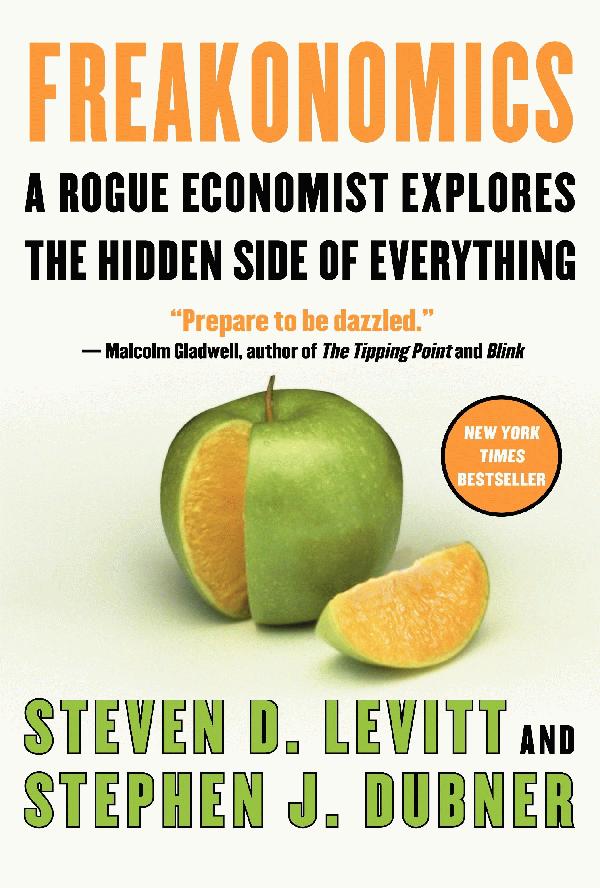
One of the most recent tomes to enjoy this treatment was Freakonomics by Steven D Levitt and Stephen J Dubner.

It's economics Jim, but not as we know it.

There is no overarching theme, but some of the questions that are tackled by Levitt (he’s the economist, while Dubner is a journalist) are intriguing to say the least.

For instance, he debunks the idea that the dramatic fall in crime in the US in recent years was primarily down to innovative policing or changes in sentencing (although he does note that increased numbers of police would have been beneficial).

Instead, he reveals a factor that had not come into many discussions before: that of the impact of the legalisation of abortion meaning that just as a generation of youngsters from that era would have been coming into their criminal prime, they were not there.

Such an analysis is fraught with difficulties, since abortion remains such an emotive subject. But Levitt seems to have been thorough in his work.

For instance, prior to Roe v Wade, the case that saw abortion legalised throughout the US, it had been legal in three states for a short period of time. In these states, the same fall in crime is noticeable earlier than in the rest of country but at the same rate that the rest of the country would subsequently see.

Levitt has been accused of many things for this research, from being a racist to being a eugenicist. However, as elsewhere, he merely looks for what is behind the available data – he makes no moral pronouncements. And quite frankly, while the results of his work may not seem palatable to some, it’s knee-jerkery to dismiss them with such accusations.

He’s interesting too on education and parenting. But this is also where one starts to get the feeling that he’s perhaps over stretching himself – or rather, over stretching what economics can show.

On the one hand he uses incredibly detailed data from Chicago to argue that many parental choices and actions have no impact on children, as much of what they will become is already genetically imprinted in them.

Yet elsewhere, he argues that peers have more influence on children than their parents and later, when discussing this in terms of adopted children, he admits that the approach of adoptive parents can change and improve the life outcomes for an adopted child, even if it cannot, for instance, change their basic intelligence.

In other words, his data shows many things, but even he knows that it would be too crude a conclusion to take his findings in isolation.

And in the ‘bonus material’ at the end of the edition that I was reading (newspaper articles) we see again the limitations – even the danger – of trying to view the world in economic terms alone.

In one brief essay, Levitt looks at leisure activities and he asks the question of why someone would pay more to knit their own scarf than to buy one. Included in his estimate of the cost is that of the person’s own labour. But doing that clearly dodges the question of the pleasure and satisfaction that the knitter gains from that creative activity – and indeed, from producing an end result that they can then wear.

"Cooking for fun” (as a survey of US activities put it) confuses him too.

Again taking the labour into account, he reaches the conclusion that it would be far cheaper to simply buy a takeaway or ready meal from the shop.

Now to be fair, there are hints in the piece that Levitt himself knows that life doesn’t work this simply, but he does seem to be trapped into asking questions where he expects – and wants – clear-cut economic answers.

In this brief essay he seems to suggest that everything is reducible to thinking in terms of finance and incentives.

Now in most households, someone has to buy and prepare food.

It might be the act of buying that ready meal, taking it home and then popping it in the microwave before divvying up onto plates, but it still has to be done.

That, of course, can easily be classed as a ‘chore’.

But what if you take greater time because you want to have control over your food and do not believe that highly processed fodder is actually any good for you?

How does that change the economic situation? It’s still a ‘chore’, but how do you assess the motivation and calculate the cost of that? Indeed, how so you economically calculate the impact of a better diet?

The article suggests that, in terms of economic incentives alone, fast food and ready-made meals are the sensible option.

But to take it a stage further, what happens when you do the latter – not just for the reasons briefly listed above, but also because you actually enjoy it; you find it, say, as therapy after a tough day at work?

Does it cease to become a chore and become leisure?

It’s that peculiar dividing line between leisure and non-leisure: as if something, if it is enjoyable, has less of an economic value.

It’s as though we have become suckered into seeing everything in terms of economic productivity – that economic productivity is the most important factor in all our lives, or should be.

Perhaps, in terms of the US and UK, this is the case – not least because there still exists a rather puritanical idea that work is the most important thing in one's life – even above family and certainly above pleasure.

In Stewart Lee Allen’s In the Devil’s Garden, a history of taboo foods, he comments that food culture in the US is now so denuded of pleasure that people scoff their tasteless fodder to get back to work that much quicker. In other words, go back to being productive.

It’s perhaps no coincidence that, in general, people in the UK and US scorn the idea of the French two-hour lunch. It’s culturally viewed as something negative.

But hold on a moment.

A couple of days ago, the Daily Mail published an article boasting that one of Margaret Thatcher's best legacies was that people in the UK work seven hours longer, per week, than we did before she came to power in 1979. And that is at the same time as workers in most of the rest of Europe have seen their own working week shrink.

That's a great boast. Yet it gets 'better'. In fact, in that time, productivity in the UKL has actually fallen.

And if we specifically compare the UK and France, then the French work noticeably fewer hours than we do – but their productivity is higher. Strangely, the Mail didn't actually mention that, but then who would want to boast that people work longer, to less effect?

But given this sort of attitide, it's little wonder that the likes of Levitt struggle with how to deal with “cooking for fun” in economic terms.

It would be interesting to see them actually try to come up with an economic value for the French 'lifestyle' given that basic data, which comes from a pretty reputable source in the OECD.

Levitt has plenty to say that is of interest – it's easy to see why his expertise is in economics and crime – but he might not have intended to show, as effectively as he has, the limitations of economic analysis and the negative impact of a certain type of economic philosophy on UK and US lifestyles.

Wednesday, 4 May 2011

Lunch just got a lot better

It’s become a regular occurrence to find myself complaining about the state of lunches on a work day.

It wasn’t so much the case that there was no variety available as the quality – and cost. Pret a Manger might have been decent (apart from an obsession with rocket), but it was costly.

The in-house ‘deli bar’ was poor and my own occasional efforts were variable, revealing a distinct lack of creativity on the packed lunch front.

Two things may have changed all that.

One of those has been the move to the new offices, with the company running the catering facilities determined that it should be their flagship contract.

Breakfast is considerably better. Lunch is better too – they have a proper kitchen now to start with.

But the other factor was the arrival of a slender tome from my friend George, which was in direct response to the most recent complaints in these columns.

The book in question is The Packed Lunch, a collection of recipes from Australian Women’s Weekly.

It’s a bit of a revelation – not just because there are some good recipes in there, but also because it offers some very good general tips.

For instance, in many cases, it’s best not to dress a salad the night before: carry the dressing to work in a different container and only decant it when you’re about to eat.

Now why hadn’t I thought of that before? It’s obvious when I consider a few of my previous attempts to prepare something for myself and have made exactly that mistake. You can end up with leaves, for instance, that are simply a mess and utterly unappetising after sitting for hours in a dressing.

As it happened, the first recipe that I tried could be dressed as soon as it was ready to go in the box.

Simply cook some lentils gently in a little water, then drain and cool. The recipe called for this to be added to “canned” beetroot. Now I assume that this is an Australian thing, because I’ve never seen such over here, but unlike the reviewer on Amazon, I didn’t get all negative, but simply halved some baby pickled beets (which I love) instead, and then dressed, as per instructions, with a little Balsamico.

When I sat down to eat, I added some soft cheese that’d I’d diced and then packed into a separate, small container. And very nice it was too, without requiring any great effort.

The following day, I took in two quarters of a frittata that I’d made with a wide array of ingredients – the idea of the frittata came from the book (I wouldn't have thought of it as a packed lunch item), the ingredients from the combination of my imagination, fridge and cupboard.

Again, a success – and the remainder kept well enough to be enjoyed for the following day.

On day four (the last at work before the Easter break), I ate in the deli. Much better than I had expected.

But on Monday evening, the eve of our first day back after the break, I’d sliced red onion, roasted red pepper and celery. And this time, I took the dressing to the office in a little jar, together with another little pot of diced goat’s cheese.

The salad was another of mine ideas, based on what I had in. The dressing was straight from the book: a teaspoon of tomato pesto, a teaspoon of white wine vinegar and two teaspoons of olive oil, shaken but not stirred.

And again, this was very good. The salad kept well and still had loads of crunch; the cheese hadn’t been discoloured by sitting with everything else overnight and the dressing was a success.

Today, it was another frittata – softened onion and three different cheeses this time.

But something else is making a difference too.

In the past, I’d invariably sit at my desk, working while eating breakfast and lunch. Cloud Nine was great as a bar, for drinking and socialising, but it wasn’t somewhere that I ever wanted to sit down in to eat.

The new canteen, with tables and chairs extending into the atrium, is a pleasure to spend time in.

So I’ve been taking my food down there to eat. It’s an enormous lifestyle change – and a very positive one.

I’m currently trying to do some research on ‘the French paradox’ – the question of why the French can consume such amounts of fatty foods (including such delights as cheese and butter and paté and foie gras) without the heart disease that would be considered over here as an inevitable consequence of such a diet. The French also do not have the same levels of obesity – in spite of their incredibly rich diet, that's high in fat and so many of the things that we have demonised.

One of the things that I’m already coming across repeatedly is that the French don’t sit in front of the TV for dinner or at their office desk for lunch.

They pay attention to their food and take their time to eat it – it helps, of course, that it's usually worth paying attention to.

Researchers from the University of Pennsylvania have even shown that French people in a McDonalds take longer over a meal there than Americans in the same restaurant.

Now clearly this is not the sum total of what causes ‘the French paradox’, but it is quite revealing.

At present, sitting down properly to eat my lunch in pleasant surroundings instead of at a desk, I don’t rush – and yes, I have actually been appreciating what I’m eating. Sometimes there’s even company and conversation.

Even setting aside the question of whether it’s good for my health, it’s so much more pleasant.

And a big thank you to George for the book.


The French paradox (2004 article).

Tuesday, 3 May 2011

Beside the seaside

Yorkshire. Day two. Or to be pedantic, day two and a half. And having breakfasted, we set off from the hotel with a firm plan of action.

This time, we boarded a train to York and beyond, skirting the North York Moors and finally pulling to a halt in Scarborough.

‘Oh, I do like to be beside the seaside …’

For all the sun – and it was a lovely day – there was a blustery wind coming off the North Sea. I had my leather jacket with me for the trip as a whole, but it was rolled in a bag for this trip. This was neither the time nor place to be swanning around in leather.

But a t-shirt with very short sleeves was taking things too far the other way and my arms were covered in goosebumps by the time we were halfway down the town’s main Clone Town shopping street.

An Edinburgh Wool Mill offered rapid relief in the form of a sea green sweatshirt – and then it was off again, cutting away from the crowds down a side street of far greater charm.

This brought us out near the top of the cliffs, near the Grand Hotel, with a funicular railway and the absolutely delightful Parlour Tearooms next door.

We took seats outside and ordered tea and cakes: in my case, a slab of tea loaf, moist with plump fruit and slicked with a generous portion of butter. Who says Yorkshire folk are stingy? We could gaze at the sea or over toward the remains of the vast castle that top the hill on the opposite side of the bay. Perfect.

The café itself harks back to years long gone, with a touch of humour in a painted window sign that proclaims “dogs and sprogs welcome”.

Wending down to the seafront, you hit a different world. All the gaudy sights and sounds of the seaside; amusement arcades, shops selling loads of kitsch (to which I am addicted) and, in Scarborough’s case, countless eateries offering fish and chips.

There was even a shop offering huge sticks of fudge – some with very peculiar flavourings. Not least amongst these was a Marmite fudge – and no, I didn't try some!

It’s rather tragic that, although Scarborough is still a working harbour, not one of those restaurants or cafes serves fish that has come inland there. There’s not enough stock in this part of the North Sea; the big catch for local fishermen is lobster, with something like 20,000 pots in the area.

Not that wandering around the small harbour itself wasn’t fascinating, particularly as it was a day when the camera barely shifted from around my neck, allowing me the chance, on one occasion, to rip off a shot of a gull as it flew out of a skip.

Looking inside after the bird had gone, there were masses of left-overs from fish that had rapidly been filleted. And the thought that struck home was the amount of waste – well, obviously not as far as the gull was concerned.

We ate at a café on the harbour itself. Run by a couple, we were warned that our lunch would take 10 minutes, as it would be cooked for us. That is absolutely fine by me.

And it was the best fish and chips I’ve had in many a year, since an afternoon a long time ago in Hull, although the cook explained that he gets his fish from the Faroe Islands – unfrozen. Wherever it came from, it tasted very good.

The batter was a dream: wafer thin and covered in a filigree of light crispiness that made me remember exactly why, as children, we rated scraps – the bits of batter left in the fryer, which could be bought by the bag for a penny – as such a treat.

The chips were not piled high, but they were hand cut and properly cooked. The mushy peas were fine and there were even slabs of bread on the side. Forget the slice of lemon that came with it – a modern affectation – all you needed was salt and perhaps the barest hint of malt vinegar on your chips.

It was a meal to relish.

Ambling further, I took the chance to photograph more gulls, who stayed put in their determination not to risk losing a spot near where a boat was expected to dock or where leftovers materialise from the sheds.

With time on our hands, we made a rapid decision to join a boat going for a trip out to sea, and found ourselves in the middle of another bit of history.

The Regal Lady was built in 1930 by Fellows & Company of Great Yarmouth for the Yarmouth & Gorleston Steamboat Company.

Originally called the Oulton Belle, she was a double-ended steamer that became one of the ‘Little Ships’ at the Dunkirk evacuation in 1940, before being requisitioned by the Navy until 1946.

In 1954, she was brought to Scarborough and given her current name.

We sat out at the front as the boat chugged gently past the little lighthouse before hitting the first real swell.

A few minutes later, fellow passengers had fled inside as waves splashed over the prow. “Shall we go in?” asked The Other Half. On the basis that my hands were by that time attached very tightly to the boat itself and my stomach was debating whether having eaten beforehand was a wise move, I had no inclination to risk shifting my body, and besides, as I told him, I’d wanted something that would blow the cobwebs away.

Eventually, with the cobwebs fully departed, I edged inside, managing to crash an elbow into the thick plastic window of one of the doors. Fortunately, nobody noticed the rather large cracks.

Inside was quite surreal, like stepping into a 1970s pub, with customers perched on small upholstered barrels and shipping maps turned into tables, listening to ’60s pop hits and supping pints.

There was something rather Alan Plater about it: indeed, it could almost have been straight out of his wonderful Beiderbecke series.

We didn’t imbibe. And my stomach coped. Which couldn’t be said for everyone. A man nearby had a face that was bleached of colour even before his wife attempted to put his coat around his shoulders comfortingly.

Then he stood, lurched forward a little, put his hand to his mouth and vomited all over the place.

This was not apparently an unusual situation. One of the crew pottered nonchalantly out with a bucket and mop. The wife took the same coat into the tiny toilet, and was still attempting to scrub it clean when we docked again.

We ambled some more, wending our way up the steep streets until we were back in Clone Town and near the station once again. And then it was back to Leeds aboard a ridiculously small Pennine Express train, with a couple of outbreaks of bad temper as people discovered that, for whatever reason, seat reservations had not been prepared in the carriages.

Things happen – technical problems, shortage of staff etc – but the company really should announce to passengers that there’s been a problem, thus helping to avoid fractious outbursts as people accuse others of sitting in ‘their’ seat.

Being near the sea can never be a bad thing for me. And the day had moments of utter bliss – not least that tea loaf, the fish and chips and the gulls, from their skirling cries to their reluctance to flee the moment I pointed the camera at them.

By the time we were back in Leeds, the only thing to consider was dinner – and for that, we headed to the nearby Brasserie Blanc.

Given a big lunch – every last crumb of which had been enjoyed – the general feeling was that this meal would involve no starter. But that was a flawed plan, since it ignored the many enticements of the menu.

In the end, I opted for an asparagus risotto (lovely textures and tastes, with the asparagus itself served in three different ways: as a sauce, stalks slivered into the risotto itself and a couple of spears topping the dish), followed by a second ‘starter’ – superb Cornish smoked mackerel with cucumber and horseradish: perfectly-sized portions just bursting with taste.

And to finish, a dish of rhubarb and custard, topped with smashed cinder toffee – a delicacy that I’d forgotten about until we’d spotted some in York and then bought two bags in Scarborough in a fit of delighted nostalgia.

There’s a recipe in the Yorkshire Relish book I’d found in York that involves cinder toffee – indeed, it even gives instructions for how to make it.

Regional food is a thing to cherish.

Monday, 2 May 2011

In the land of The Other Half's fathers

Or Yorkshire, as it's otherwise known. Yes, dear readers, I spent part of last week in the white rose county, from which The Other Half hails. And I survived – although I do now possess a tweed flat cap to show for it – but no ferret or whippet!

Taking advantage of the double bank holiday (sounds like a happy hour special), we took an extra three days off work and then took off for Leeds.

Arriving there on Tuesday afternoon, I was offered a choice of activities to while away the rest of the time before evening (and dinner).

Now how many blokes do you think would ask their bird if she'd prefer to go shopping or visit a military museum – only for the aforementioned bird to opt for the latter? Well, this one picked a visit to the Royal Armouries – after all, given that pretty much everywhere in the UK is Clone Town these days, it seemed unlikely that Leeds' main shopping area would produce anything novel.

The Armouries, on the other hand, was fascinating. Yes, it is what it says on the tin – a lot of weapons and armour, including a suit of jousting armour that belonged to Henry VIII, and a very weird and slightly creepy horned helmet that was made between 1511 and 1514, and given to the same monarch by Holy Roman Emperor Maximilian I.

It's a strange piece. The spectacles may apparently indicate a fool – was Max taking the pee, so to speak? But the horns made me think of Andrew Graham-Dixon's fascinating Art of Germany documentary series a few months ago, in which he started by emphasising the place of the forest in the German imagination. The horns on this extraordinary item – which was made by Konrad Seusenhofer in Austria – seemed to nod to the fairy tale fears that hide in the dark amid the trees.

Moving beyond Henry VIII, though, there was much more to interest – not least seeing the real versions of iconic weaponary that we know through comic books and westerns: a Colt 45, for instance, or the impossibly flimsy Sten submachine gun MkIII. And given my own historical passions, it was particularly interesting to see a display of arms from the Franco-Prussian War.

It's an interesting museum – if a tad noisy from all the many interactive displays that are aimed primarily at children, which seem to overlap in your ear.

But with that experience behind us, it wasn't long before the hour chimed for dinner.

We were staying near the river and decided to pop just a door down from the hotel to Brasserie Forty 4. This proved an excellent choice.

My first meal in Yorkshire began with duck rillettes, a lightly spiced rhubarb chutney and crostini. Very tasty it was too – and while I could get pedantic, pointing out that rillettes really is supposed to be a dish made with pork, at least the meat was shredded as the pork should be.

Rhubarb, of course, is a very Yorkshire ingredient – the 'Rhubarb Triangle' is only a short distance away – and it works as an excellently tart accompaniment to duck, cutting through the sweetness of the meat.

That was followed by a rather nice piece of roast haddock with black pudding rösti, and then a dish of lemon posset with a pistachio tuile.

All good stuff. And washed down with a Sables and Galets Gewürztraminer 2008 terroirs d'alsace that offered a nice moment of personal satisfaction. Having suggested we go for that one, The Other Half nodded in my direction when the waiter arrived and was about to pour a drop or two for him a taste.

A really flowery aroma and taste brought to mind elderflower and I said so. It wasn't, but the waiter looked impressed (I hate to think what the general reaction to wine is, given his response to my novice's analysis) and told me that it was rose and lychee. But most important, it was very nice as well.

And so that was day one.

Wednesday saw us potter around by the river for a while before heading out to York, which is only a short train journey away.

This was one of the day trips that I'd most wanted to do, never having visited this historic city, and we started with a gentle stroll from the railway station into the centre of the city via a very nice park, with plenty of flowers and a ruined abbey (another bit of Henry VIII's legacy, no doubt).

We crammed a remarkable amount into just a few hours, starting with the famous minster itself – although I drew the line at going all the way into the church, having seen the prices.

The Jorvik Viking Centre offered another history hit – this a look at the remains of a Viking settlement under the present city. Excavations since the 1970s – which are ongoing – have provided an extraordinarily detailed picture of life in that time, allowing a recreation of a few streets, together with animatronic figures – and smells.

We're so absorbed with the idea of the Vikings as warriors that we forget that they were sailors and traders and superb craftsmen – some of the work that survived in the Yorkshire soil is astonishing and beautiful.

Glancing around the centre's little shop, I found pieces of stone engraved with runes – in one case, the rune for 'ing'. This intrigues me. My maternal grandmother's maiden name was Ingham. Now given the difficulty of finding out anything concrete about either side of my family, a few years ago I did a spot of research around that name, since it doesn't seem to be one that you hear or see every day.

It's made up of two parts. The first part is the 'Ing'. The second part – the 'ham' – means a 'hold' or 'home'. But who, then, was Ing that had a hold? I eventually came up with a German name for the goddess of fertility known in the Norse as Freya (whose name gave rise to Friday – Freya's day).

So it seems reasonable to suppose that at least part of my family was Saxon. Which seems pretty cool, really. And it horrified my parents when I told them (thus tickling me pink). But it's also why I find the whole northern European thing of particular interest. Any why I bought the stone with the rune for 'Ing' on it.

The Shambles offered some more non-Clone Town shopping amid half-timbered buildings that lean so far that you wonder how they're still actually standing. Around the corner at an old-fashioned market was where, in a spirit of ee-by-gumness, we both picked up tweed flat caps as souvenirs. It's hanging on top of my French beret right now.

There was also time to visit the infamous Clifford's Tower – it's difficult to look at this rather picturesque ruin now and think that this was the scene of the 1190 massacre of Jewish residents of York – and then take a walk along some of the enormous lengths of city wall that are still standing and in excellent condition.

And I cannot forget to mention spotting the best address I think I've ever seen: 1 1/2 Whip-Ma-Whop-Ma-Gate. How splendid is that?

It's a lovely city that also offered the chance for a spot of foodie shopping – a book of recipes by chefs of restaurants in Yorkshire and a packet of tea from Holmfirth, which The Other Half intends to send out to his mother in South Africa, since that is where she hails from.

Back in Leeds, we enjoyed a couple of pints of Theakstons sitting next to the river outside a pub next to the hotel in the early evening sun, and after tidying ourselves up, headed for dinner. I'd had fish and chips for lunch in York, but it wasn't particularly good.

Now we headed for a Loch Fyne restaurant in the centre.

It wasn't bad. I had some paté, which was nothing out of the ordinary, followed by dressed crab with lime. The best part of the meal was, without doubt, a blackcurrant sorbet that absolutely zinged with natural fruitness. Later this year, I may well make some of my own: it was gorgeous.

And there we were: half way through our little trip and wearily to bed, with hopes that the excellent weather would hold at least a day longer.