Showing posts with label comics. Show all posts

Monday, 1 April 2024

Robot Dreams is a an absolute charm

Dog is a lonely hound living on his own in a third-floor New York apartment in the 1980s. In the evenings, he plays Pong on his own. But one night, flicking through channels on TV while eating his usual meal of microwaved macaroni cheese for one, he spots an ad for a build-your-own-robot as a friend, and immediately orders one.

When he’s completed the build – hilariously watched by pigeons on his windowsill – and worked out how to activate his new buddy, their life together begins as they set out to explore the city.

Robot is fascinated and thrilled by everything, and passes on that zest for life to Dog. The pair roller-skate in Central Park, dance together, watch The Wizard of Oz together and, after Robot learns not to squeeze Dog’s paw too tightly, hold hands.

But on a trip to Long Beach at the end of summer, the pair are separated after too much enthusiastic play in the water from Robot. Try as he might, Dog can’t help his friend and, when he returns the following day with tools and manuals to do so, he finds that the beach is now locked until 1 June the following year.

How they cope without each other and learn to live again is the core of the film.

Do Androids Dream of Electric Sheep? Who knows. But Robot certainly dreams – not of sheep, but of finding his way back to Dog; dreams that are worked and re-worked from his time-limited experience of life. One in particular is gorgeous – he finds himself in The Wizard of Oz, surrounded by tap-dancing flowers doing a routine straight out of Busby Berkeley, as New York shimmers in green – seen like the city of Oz – on the horizon.

Between the Oz references, the trope of the gay love of musicals – here, Oz (don’t forget ‘friends of Dorothy’) and the Berkeleyesque routine – plus the holding hands, it’s little wonder that there is online speculation that this is a subtle and tender gay love story.

To be clear, there’s no mention of the gender of either Dog or Robot, but female characters in this anthropomorphic New York are pretty easy to spot. And the beach scenes clearly show Dog is male – watch out for a very funny swimming costume change gag.

Robot Dreams is Pablo Berger’s first animated feature and is based on Sara Varon’s comic of the same name. Entirely hand-drawn in 2D style, it has won plenty of plaudits – and rightly so. It’s a sweet, charming story, which depends on the visual, as there is no dialogue. It also references Isaac Asimov’s collection of short stories – and specific short story – of the same name. There’s a lot going on here. It’s not remotely a ‘kid’s movie’.

Don’t be misled by the animation being ‘old-fashioned’. It is fabulously done and gorgeous to watch – 1980s New York itself has been so lovingly created, while the cast of thousands has been given such wonderful attention to detail. There are couple of scenes where Dog is on a scooter with another character, riding into the countryside, where the trees coming over the horizon is simply stunningly done.

And while the comedy is gentle rather than LOLZ, it is certainly there. There’s a lovely scene about photo booths that will take those of us of a certain vintage back!

The ending is perhaps not what you’d expect, but shows a nice sophistication. The ’80s soundtrack is great.

Robot Dreams is a gentle, charming, really well-paced joy. My only personal surprise (disappointment?) as I came out of the cinema was that so many reviews have said: ‘Bring tissues – you will cry as well as laugh’, yet I didn’t.

Given how easily I blub at films (though I hate it when I feel my tear ducts are being deliberately tweaked), I walked home wondering if the absence of even a pricking meant it was not quite of the calibre so many have stated. Writing this, thinking back over the film itself, I have realised that it not bringing forth an instant deluge does not mean it’s not very good indeed.

I took lots of tissues to The Zone of Interest, expecting to find that would set me off, but it didn’t, yet it is one of the best (and most important) films I’ve seen thus far this year.

Robot Dreams is a wonderful film that I suspect is going to stay in my mind for a long time. And of course it’s gay!


Sunday, 13 October 2019

Joker is stunning – and that's no joke

You could be forgiven for imagining that nobody had ever, ever before made a film about a loner who turns violent, given some of the hyperbolic response to Todd Phillips’s new movie, Joker – a stand-alone origin story for the infamous villain in DC’s Batman universe.

The hysteria around Joker has been such that star Joaquin Phoenix walked out of an interview with The Telegraph when the reporter asked him if he thought that the film could inspire a shooter.

Quite apart from it seeming that, in the US at least, it doesn’t take much to inspire anyone with access to a gun – and while also being aware that a 2012 screening in Colorado of Batman movie The Dark Knight Rises saw James Eagan Holmes slaughter 12 people and cause another 70 to be injured – one can only assume that the Telegraph writer in question has never seen films such as, say, Taxi Driver.

But let’s set aside such stupidity and look at the film itself.

Arthur Fleck is a troubled individual: he has serious mental health issues and a condition that makes him laugh hysterically – even at completely inappropriate moments and irrespective of how he feels – yet Gotham is slashing the social services he desperately needs.

Struggling to keep a job, hes treated poorly by colleagues, while trying to care for his ailing mother and work up the routines to become a stand-up comic.

Nothing goes according to plan and, as Gotham itself spirals toward chaos, with the rich establishment showing scant concern for the general citizenry, Arthur is caught in the crossfire. The results are both predictable and tragic.

Joker is dark art house meets comic book: Phillips has stated that the only real comic influence on his origin tale is that of Alan Moore’s comic book, The Killing Joke, which sees Joker as a failed stand up, but this goes far further.

It’s close to impossible to not empathise with Fleck’s appalling situation and not understand his eventual reaction. Indeed, this is key to why the film has such a satisfying emotional and intellectual complexity. Fleck is not, incidentally, an ‘incel’ and this is not a movie about those who identify as such. It is a film that shows a hyper-capitalist society that is failing badly, rejecting anyone who isn't a millionaire and descending into chaos.

It is a world in which anyone less than a member of some sort of entitled elite is ignored and neglected.

In terms of the DC universe, Joker also provides a nice counter to the idea of the privileged, entitled, conservative playboy vigilante Bruce Wayne.

In terms of the cast, Frances Conroy gives a subtle turn as Fleck’s mother, while Zazie Beetz as his neighbour lends real human warmth to the piece and Robert De Niro is excellent as a smarmy TV talk show host.

But ultimately, the film rests on Phoenix’s shoulders and wow … well, what can one say? It’s a stunning performance that, unless something really crazy happens, will be featuring big time come awards season.

You cannot take your eyes off him, from the opening scenes until the end. It is a mesmerising, monumental performance.

Lawrence Sher’s cinematography is superb – Gotham is shockingly claustrophobic even in the open air. Phillips’s screenplay and direction are excellent.

The use of music is also worth noting: the shift from easy listening to rock ‘n’ roll is superb in what it reflects – and I will never be able to hear Sinatra singing That’s Life in the same way again.

Ironically, in having not been made by DC Films, it is the best film made from a DC character. Ever.

This is a classic for our times – and my goodness, it feels utterly timely too.

Fabulous stuff. Possibly the film of the year – do not miss.


Wednesday, 8 May 2019

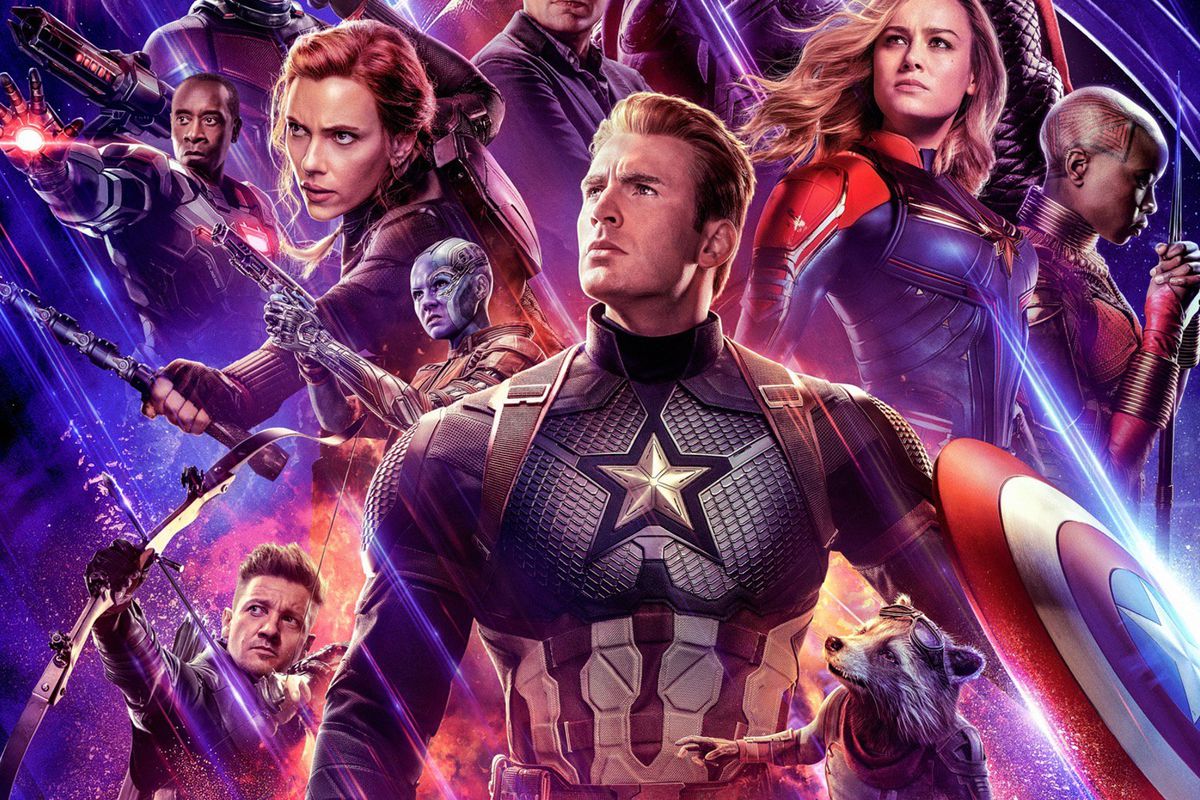
An Engame that sets us up nicely for the future

Just under a year ago, reviewing Avengers: Infinity War, I described it as “over-hyped and flawed, but still an enjoyable romp”.

Having seen it again on TV, there’s no mind-changing going on here.

But 11 months on and Marvel/Disney have given us part two: Avengers: Endgame. And its fair to say that, while the hype has been even greater, the reality is streets ahead of its predecessor.

Rolling in at another whopping three hours, this picks up where Infinity War left off, with the remaining Avengers searching for a way to undo what Thanos had unleashed.

It’s giving away little to say that time travel is involved but, as the film explains, not like in any other movie you’ve seen – basically, even "Back to the Futures a bunch of bullshit"!

You can make a case that the Russo brothers engage in about 30 minutes of indulgence in the later stages of this film, but they get away with it. Why? Because it’s the end of an era and that deserves respect and care. Yet Endgame never feels as though it drags in places, as its predecessor did. This is a more emotionally engaging movie.

There’s character development – even Steve Rogers/Captain America gets to show a spot of humour – while Mark Ruffalo has an absolute ball as Bruce Banner/Hulk. It is, indeed, the first time I’ve really felt engaged by the latter – and Ive been watching that character from TV’s Lou Ferrigno on.

In the massive – and impressive – ensemble cast, Josh Brolin gets to deliver another creepy Thanos performance. Indeed, this quiet-spoken tyrant with a god complex gets one particularly skin-crawling speech.

Karen Gillan is superb as Nebula, Rene Russo gets a great brief turn as Frigga and Tessa Thompson as Valkyrie leaves you wanting to see her get the chance to develop the character further.

Then there are characters that, for me personally, I had not really noticed before, but did here and felt that they worked well: I see you, Jeremy Renner as Hawkeye and Paul Rudd as Ant Man.

All of this is without mentioning the Marvel icon that is Iron Man, in the person of Robert Downey Jnr – a character that helped get me into Marvel superhero movies in the first place, precisely because he wasn't a boring, bland fart.

Endgame has plenty of moments that provide real surprises. The fight sequences work, without dominating everything else. It has humour aplenty – more than last year’s offering. 

In other words, it’s cracking entertainment.

There are loads of potential set ups for future, post-Avengers development – and given the money these films are raking in, it’s a safe assumption that there are plenty of things already in development.

Given the Sony-Marvel set up – plus Deadpool over at Fox –one can only muse on what it would be like if any one studio pulled all these threads together. 


I kid you not: I’m salivating at the thought.

Oh. And in case you are wondering, there is one (last?) Stan Lee cameo.

Friday, 12 April 2019

A hell of a superhero romp

Boy, oh boy – the new Hellboy film has taken a critical panning. Before even reaching its first weekend, review aggregator Rotten Tomatoes had pelted it with an approval rating of just 12%, based on 97 reviews.

Surely it can’t be that bad?

Well, sure enough, it isn’t.

Let’s be clear – it isn’t Guillermo del Toro and isn’t Ron Perlman. The 2004 and 2008 films that the director and actor collaborated on are huge fun and the latter turned in a pair of iconic performances. I cant stop smiling at the scene in the second film where lovelorn Hellboy and Abe Sapien drunkenly sing along to Barry Manilow.

But lets also be clear – in a lot of ways, this screen reboot is actually closer to the look and feel of Mike Mignola’s original Hellboy comics – and I have loved those for years.

Here, we get the requisite origin reminder: demon baby Hellboy, summoned up by Rasputin for the Nazis in a last-ditch effort to win the war (and filmed by Leni Riefenstahl), but saved and adopted by Professor Trevor Bruttenholm, founder of The Bureau for Paranormal Research and Defense, a joint UK-US body.

The key plot here centres on an ancient sorceress, Nimue, The Blood Queen (Lady of the Lake), defeated centuries earlier by King Arthur, but now back with a vengeance and planning to wipe out humanity so that ‘monsters’ can live un-threatened in a new Eden.

No spoilers from me on the plot. But it is entirely in keeping with Mignola’s originals, which weave the modern with folklore and fairytale. Indeed, the comics were where I first learned of Baba Yaga (who crops up here too, in a seriously creepy piece of CGI work).

It’s violent – as are the comics – and indeed, the fight scenes capture the gravity-defying sense of action (and incredible composition) in Mignola’s original drawings (see left).

I’ve seen the film described as a bit all over the place, but I can’t see that. Perhaps not as tight as it could be, but it didn’t lag for me.

David Harbour as the eponymous hero seems to be feeling his way into the character: some early method mumbling doesn’t help, but by the second half of the film, when he’s getting sterling support from Sasha Lane as Alice Monaghan, a young woman with supernatural abilities, and Daniel Dae Kin as BPRD veteran Ben Daimio, he seems much more comfortable.

There’s sardonic humour, badass monsters and fight scenes aplenty, and a straight-up Mignola mash-up of folklore and mythology.

Ian McShane adds to all this as Bruttenholm, Hellboy’s daddy, while Milla Jovovich provides scary, sexy class as Nimue. 


It’s not perfect, but it’s also light years away from Marvel ands light years better than most of what DC has done in recent years. For me, as a long-time Hellboy fan, Neil Marshall’s film is a rollicking romp in the Hellboy universe and I hope we’ll see more.

After all – they can’t leave things just as the new team discovers Abe Sapien!


Friday, 5 October 2018

Venomously underwhelming, but just perhaps ...?

Marvel Studies can do little wrong these days, but while they make it look easy to produce big, brash and fun films, Venom is a reminder of just how cleverly they do it.

Intended as the first offering in a Sony Marvel universe, Marvel Studios were not involved in the film – although Stan Lee is credited as an executive producer and, almost inevitably, has one of his Hitchcockian cameos.

In many ways, this is a mess. Apparently, Tom Hardy stormed off the set at one point, furious with his dialogue. The first half of the film lacks pace as it sets up the basic premise of how Hardy’s investigative journalist Eddie Brock become host to alien lifeform Venom, which is on Earth courtesy of the Elon Musk-like Carlton Drake, a filthy-rich, techy entrepreneur with a messiah complex.

Brock has already pissed off Drake by challenging his ethics and, as a result, lost both his career and his fiancé Anne (Michelle Williams).

If not quite yawn-inducing, this set up does nothing to set the pulse racing. However – thank goodness! – when Venom and Brock become one, everything lifts. It could almost be a sexual union in terms of the energy it injects into the film.

This is not to say that everything is suddenly fab, but apart from anything else, it does create a sense of fun in the banter between Brock and Venom (the latter voiced by Hardy), which is as effective as a celluloid snort of cocaine.

Suddenly it become clear that, with more attention to the script, Venom could be more than a very, very very, very poor man’s Deadpool.

Some of the CGI is too fast – there’s a late fight scene, for instance that leaves you wondering what is actually happening on screen – but you make it to the end and find that, ultimately, it’s been measurably closer to being fun than to simply being a snore-a-thon.

Hardy grows into the role too, seeming uncomfortable early on, but developing as he gets to unite with Venom.

Williams is feisty and (like Brock) becomes less one-dimensional as the film develops.

Riz Ahmed turns in a nice performance as Drake, catching a really good tone of barking, amoral genius with far more subtlety than one might expect from a villain in the cinematic incarnation of a comic.


Hardy has signed to make two more Venom films: there was just enough here to suggest that this could be a good move. But this is far from a A-plus: Sony has some work to do.

Saturday, 26 May 2018

Over-hyped and flawed, but still an enjoyable romp

In terms of sheer hype and expectation, Avengers: Infinity War must be near the pinnacle of Hollywood frenzy. One of the most expensive films ever made, with an estimated budget of $316–400 million, it achieved massive pre-release ticket sales and, by 26 May, had pulled in $1.849 billion at the box office.

Bringing together various strands of the Marvel universe, it centres on the acquisition by Thanos of all the infinity stones, rendering him pretty much invincible.

Various superheroes try to stop the genocidal lunatic, but all fail.

This provides the core idea that many fans have hailed – that supposed superheroes are not that super and can end up doubting their own abilities etc. None of this is, however, new.

There are a lot of things here that work – and when they do work, they work very, very well: the banter between Tony Stark and Dr Strange and their relationship with Spider-Man offers much fun. After all, when you get Robert Downey Jnr and Benedict Cumberbatch firing off each other, it’s likely to be worth watching, while Tom Holland is very good as a the teen among them.

The Guardians of the Galaxy crew are just great – not least the part of the team (Rocket and Groot) that splits off with Thor. Honestly: I possibly need to buy this film on some format just to rewatch (and rewatch and rewatch) Chris Hemsworth’s Asgardian god repeatedly describing Rocket as a “rabbit” and later, Groot as “Tree”. This is comic genius and probably worth the admission price alone.

Josh Brolin’s Thanos is actually very good. He brings to the role a sense of a warped intelligence that has begun from a genuine concern at what causes poverty to one that allows himself the power to solve it by wiping out half the population of every planet that he visits – and then convincing himself that, as a result of his decision, everyone lives happily ever after.

Indeed, the character itself and the question that he addresses lends a philosophical element to the film that is welcome.

But unfortunately, the whole also suffered from being overlong and, by the end, rather repetitive: ‘how many times have we seen this fight?’

It also shows us how out of date Captain America is: more modern superheroes are much savvier and funnier. Steve Rogers is past his sell-by date and it shows. Interestingly, it also illustrates the yawning gulf between Marvel and DC, the latter of which continues to plough forward with a batch of dated characters, with only Wonder Woman really suggesting a sense of a really new life through comics and film.

There’s lots to like here, but it’s already a long way from being the best Marvel film released this tear: Black Panther and Deadpool 2 leave it standing.

But doesn’t this also all tell you the level of expectation that now awaits every Marvel release? And what will it be like by the release of the second part of this story, slated for 3 May next year?


Sunday, 18 February 2018

Black Panther leaps onto screens with style and depth

Marvel’s growth as a cinema brand was always set to continue this year, with Avengers Infinity War due out in the spring, Deadpool 2 shortly after that and Ant-Man and the Wasp in mid summer, but for a whole bag of reasons, Black Panther is arguably the biggest release of them all.

Sitting in a packed cinema on opening day, with one of the most mixed audiences imaginable, it was impossible to miss the expectation, just as it’s impossible not to be aware of the film’s cultural importance.

The eighteenth film in the Marvel Cinematic Universe, it’s based on the superhero comics series that was created by Stan Lee and Jack Kirby in 1966.

The film gives us a basic backstory about the creation of a fictional east African nation made up of five tribes that are united as Wakanda under the first Black Panther. Once established, Wakanda develops extraordinarily advanced technology, that – among other things – enables it to hide itself from the rest of the world by appearing to be a poor Third World country.

Fast forward to Oakland, California, in 1992, where a Wakandan prince has become convinced that isolationism is wrong and that the country should share its technology with people of African descent around the world to help them defeat their oppressors.

Fast forward once more to the present, just after King T’Chaka’s death and the accession of his son, T’Challa, to the throne. But before hes got time to properly get his feet under the royal table, faces from the past reappear, determined to exploit the change of monarch for their own ends.

This is a cracking Marvel romp, but with enough of a philosophical edge around the issue of isolationism – and the legacies of colonialism that the film also makes clear, open references to – to illustrate (were it needed) that comics and the films based on them don’t have to be vapid.

Scripted by Ryan Coogler and Joe Robert Cole, and directed by the former, the film also benefits from excellent production design by Hannah Beachler, who creates a visually convincing Wakanda that melds the advanced technology with a vivid sense of actual African cultures.

The cast too is uniformally excellent – starting with Chadwick Boseman as T’Challa (channeling Mandela a tad, but why not?). This is a character who’s dignified, brave and morally intelligent – and fortunately Boseman ensures that hes sexy and complex too, avoiding that oh-so-serious quality some Marvel superheroes have.

Michael B Jordan as Erik ‘Killmonger’ Stevens is another who adds a pleasing level of complexity to his role, while Lupita Nyong’o as undercover Wakandan spy Nakia, Letitia Wright as Shuri, T’Challa’s teenage sister and the nation’s tech genius, Danai Gurira as Okoye, head of the country’s all-female special forces and royal bodyguard the Dora Milaje, Florence Kasumba as Dora Milaje member Ayo and Angela Bassett as Ramonda, T’Challa’s mother, give the audience more really strong impressive female characters in one film than anyone would usually expect.

And not to forget Forest Whitaker as Wakandan elder statesman Zuri, Andy Serkis – appearing almost without CGI! – as South African black-market arms dealer, smuggler and gangster Ulysses Klaus, Martin Freeman as CIA agent Everett K Ross and South African acting legend John Kani as T’Chaka and there’s not much chance things are going to slip in the acting department.

The action sequences are as good as you’d expect; the whole thing looks superb and some of the mythical/ancestral plane sequences are really beautiful. Indeed, the sense of the mythological in the film is part of why its so successful: it has a feeling of a story that really does go back into the mists of time.

Irrespective of the expectation, Black Panther is a top-notch entry into the Marvel film universe.

Of that expectation – no film is going to spark a revolution, but it has gone way beyond simply avoiding being ‘not disappointing’. It offers black audiences – actually, all audiences – a whole raft of positive black characters and a positive black/African world.

It’s going to be fascinating to see what might be inspired by that.

Friday, 19 May 2017

A galaxy of fun with Groot and the gang

With Marvel now apparently able to pump out successful films at will, Guardians of the Galaxy Vol 2 landed this spring to an expectant global audience that had made the first film such a massive – and unexpected – hit.
Set just a few months after the first instalment, this one sees our disparate bunch of heroes fighting off attacks by the genetically engineered Sovereign people, after Rocket steals from them for the sheer hell of it.
Hopelessly outnumbered, they bump into a godlike being who helps them escape – but what does he want in return?
In the meantime, the leader of the Sovereigns has hired Yondu to hunt them down, Gamora and Nebula are continuing their sibling rivalry and Baby Groot is slowly growing, but is confused about buttons on nuclear bombs.
It’s been suggested that this new film doesn’t feel as fresh as the first – well, there was never going to be quite the surprise factor – but it’s a rollicking good romp, with banter, action and laughs by the bucketload.
Chris Pratt as Star Lord, Zoe Saldana as Gamora, Dave Bautista as Drax, Bradley Cooper as Rocket, Vin Diesel as Groot, Michael Rooker as Yondu and Karen Gillan as Nebula all reprise their 2014 roles, while they’re joined here most noticeably by Kurt Russell as the celestial Ego and Sly Stallone as a Ravager leader.
And of course, Stan Lee gets to have his now expected cameo (except here, it serves to ensure that Stallone is not the poorest actor in the whole shebang).
It would be easy to assume that a film like this is easy money for Diesel, who only has one line to say as Groot – I am Groot” – but he has to say it so many different ways and say it so slowly that it wont be lost when its processed that he more than earns his corn.
The underlying theme of family works well and benefits from being handled lightly and never allowed to water down the rebellious nature of a bunch of characters who are accidental heroes with attitude rather than boring, sanctimonious super saints.
The whole looks great and the latest Awesome Mix Tape helps keep things going nicely.

So, it’s huge fun – do wait until the very, very end of the titles before leaving – and more than enough to make you glad that writer and director James Gunn has made it clear that there will be a third film.

Monday, 15 May 2017

Comics: making and maintaining mythologies

Cometh the hour, cometh the latest comics review, with examples of graphic pleasure that illustrate – since this is sometimes still needed – just how versatile the medium is.

First up, a two-part retelling of the iconic German Expressionist film, The Cabinet of Dr Caligari. with script and art from Diego Olmos, published by Amigo Comics.

Robert Wiene’s original film was intended as a devastating damnation of the imperial German establishment that had led the country into the catastrophe of war in 1914, but against a context of new global sabre rattling and populist nationalism, it has an uncomfortable prescience.

A faithful adaptation of the film, it’s told in black and white throughout, presumably with the aim of capturing the disorienting and highly experimental nature of the film.

Hopefully, it will introduce more viewers to the cinematic masterpiece that gave rise to it, but otherwise one wonders if rethinking the visual look might not have allowed it to have a greater impact.

Also with a sense of echoing our troubled times is Royal City from Jeff Lemire, who is both penning and drawing this new story about a dysfunctional family in a dysfunctional North America.

A panel from Royal City
Against a background of changing industrial times, one family finds itself forced to look at an uncomfortable past full of ghosts. 

An excellent double-sized issue launched the work, giving time to establish the central background and then leave the reader with plenty of questions. and a sense of unease.

Depending on where Lemire takes everything, this new series from Image has the potential to be very big indeed.

From the pen of Kim Newman comes Anno Dracula – 1895: Seven Days in Mayhem, an original Titan comic instalment in his ongoing series of novels.

At the back of the first issue of this steampunk vampiric romp, there’s a handy timeline of titles so that we can see this comes after the first Anno Dracula novel and before Anno Dracula 1899 and Other Stories, which was published three months ago, which itself comes before Anno Dracula: the Bloody Red Baron.

As an aside, this also shows that a new novel, Anno Dracula 1999: Daikaiju is slated for later this year.

Anyway, this is the expected fun, with words from Newman himself and artwork by Paul McCaffrey.

It’s easy on the eye and has all the fun – including the alternate history references that help to make the novels such a thoroughly entertaining and satisfying read.

The second issue arrived at the same time as the first and ensured that the start was no fluke.

American Gods is Neil Gaiman’s award-winning novel from 2001, which takes as its central idea a battle for supremacy between the old American gods and those brought to the United States by immigrants to those shores from their original homes, and the ‘new gods’ of technology and consumerism.

A fabulous read, it now has a new life as a comic from Dark Horse, with art by Scott Hampton accompanying Gaiman’s own text. Unlike Anno Dracula, this doesn’t constitute a new entry in a particular universe – although it does diverge from the novel in some ways – but it’s good and welcome anyway.

And of course, this is at the same time as a new TV version of the same novel has debuted on Amazon Prime in the UK.

Ricky Whittle makes an impressive start as the strong, silent Shadow Moon, with Ian McShane as Mr Wednesday – otherwise known as Odin – doing a spot of inevitable scene stealing as we got under way.

But such contrasts are part of why the pair spark so well from their first scene together. 

As has become the norm for the box set generation, it takes time to establish mood and context – and thank goodness for that. Broodingly atmospheric with some stunning visuals, this promises to be a stunningly good watch.

But back to paper.

Bill Willingham’s The Greatest Adventure sees the creator and writer of Fables bring together a group of Edgar Rice Burroughs’s heroes in a brand new adventure that involves saving the Earth.

With artwork by Cezar Razek, the first issue gave us a pacy and entertaining introduction to the premise.

Published by Dynamite comics, it’s going to be interesting to see how Willingham develops this and whether it will be a straightforward romp or have some of the heft of Fables.

Given the success of that previous work, will simply entertaining be enough for an entry on the Willingham CV?

We can but wait and see.

So, an entertaining selection. With the exception of Royal City, all take their inspiration from elsewhere – either from earlier works by the same writers or from even earlier works by other creatives.

What that means in terms of these projects ultimately remains to be seen, but while there might always be a fear that some of this is simply reinventing the wheel, they also give us an insight into how mythology works and grows in our modern, digital era.