Showing posts with label Monty Don. Show all posts

Wednesday, 20 March 2013

Spring is here! (well, sort of)

The dwarf daffs have bucked the trend.
It might be difficult to believe, but today was the vernal equinox – the first day of spring.

No, I know: looking out of the window – in much of the east of the country at least – you wouldn’t be able to tell.

The sky is a blanket of grey-white cloud, putting an unrelenting dampener on everything.

As we head into evening, the birds that were at least twittering to each other under that cover have gone quiet, as the rain starts to fall again.

Someone said to me yesterday that it feels as though we’ve already had six months of winter. And it's impossible to disagree.

Temperatures are below what they should be and the gloom seems to be sticking around.

Peas, broad beans, a hint of runner & radish.
The bright spot on the horizon is that the vernal equinox is a tipping point. Since, from now on (for six months) the days will be longer than the nights in this hemisphere, the sun will – eventually – break through and temperatures will rise.

But for the moment, while some of the country is having better weather, many of us remain buried beneath that cloud.

And frankly, it feels as though we’re underneath a duvet where someone has farted.

Of our bulbs, the crocuses have been and gone – without the weather to enjoy them – and we now have dwarf daffs, which are managing a glorious display that, frankly, gives the bird to the weather.

From the perspective of the garden, this late, late spring would seem to be a big problem. Yet I do wonder if it’s actually a bit of a blessing too.

In only my second year of gardening – and arguably this is really only my first serious one – the weather is meaning that I can’t simply take what I read in a book, a magazine or a seed packet at face value.

In other words, I cannot be a book-learned gardener.

Perhaps the fact that I have all those seed cells sprouting new, delicate plants is simply beginner’s luck, but maybe not.

There is an extent to which I decided to start things off that way even though seed instructions suggested sowing straight outside last month.

In other words, I looked at the weather, looked at the packets – and then made up my own mind based on what I saw and felt was happening.

This, I think, may be a good sign for the future of my gardening. Perhaps I'm more in tune with something than I could have known 12 months ago when I started this project in such hesitating fashion?
It really doesn't look much like spring, does it?

What I do know is that it was a delightful ego rub to read Monty Don asserting, in My Roots, that real gardeners are those who sow from seed rather than buying a load of plants.

Mind, nature is more than capable of deflating ego. Slugs and snails are the perfect vehicles for that.

But I have strategies in mind and in place.

The potager is in a far better situation than it was last year.

With all the weeds and the dead and dying bush removed, there’s nowhere for slugs to hide during the day time. So the easiest option for the forthcoming months is to make sure that none get a foothold.

The potager, after carrots were sown at the weekend.
And a Dutch hoe makes attacking weeds before they can grow much really easy.

I also have copper ready to encircle any tender young plant. And will be getting copper tape to wind around any pot in which I intend to grow salad leaves, for instance.

There will be an odd ‘slug inn’ – a pot sunk into the ground and containing yeasty beer in which greedy slugs and snails will drown – but they’ll be set away from the plants I’m defending.

And there will, of course, be after-dark patrols, with torch and latex gloves to get rid of the little buggers.

I have learnt a thing or two already.
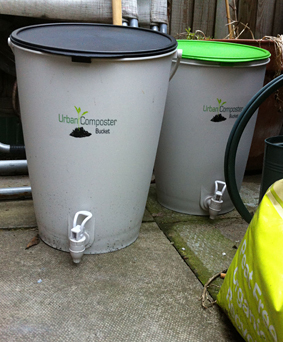
Urban compost buckets: perfect for small spaces.
And I will learn more.

But I have just this inkling – this tiny sense in myself – that maybe I do have green fingers; that maybe I have a greater connection with and sense of the soil than could have been expected.

In the meantime, I now have two 'urban compost' buckets that will allow me to create my own fertiliser and compost in a tight urban environment. It's another step up and solves the problem of space.

At breakfast in the canteen this morning, I was talking with someone who has an allotment. We hit a point where we burst into life discussing how wonderful it is to grow from seed and things germinate and develop.

Life-affirming; magical; magnificent; wondrous.

And even when we find ourselves, as now, battling the unseasonal elements, we can lift ourselves by knowing that, eventually, spring really will be with us.


Sunday, 10 February 2013

From real food to processed horse lasagne


'A proper tomato,' thinks Monty Don. And he's right.
Last night, as near-freezing rain continued to fall outside, we hit catch-up TV and the second episode of Monty Don’s French Gardens.

This was the episode looking at kitchen gardens – or potagers, as our Gallic friends would say.

In fact, since my little bit of stolen space fits neither the usual understanding of a ‘garden’ or an ‘allotment’, I may just adopt this term to describe it.

Indeed, having realised that the tatty old spade I possessed was woefully inadequate for the job of digging in compost and manure, I wandered down to Columbia Road this morning and bought a new, considerably better one. Tools do make a difference.

As I was paying, the man in the shop asked: ‘Have you got an allotment or a garden?”

Being a tad on the pedantic side, I had to say that I would call it neither – which then, of course, demanded a lengthier explanation.

Later, christening that spade by digging trenches in the grey drizzle – god, I was determined to get outside and do something – I found myself deciding that that French words best fits my little patch.

And it is a patch, I admit, that is sneakily growing. After all, when the boughs of a tree are so low that only a rather small dwarf could stand up under them, there’s no point putting communal decking there, now is there? Which means it must be part of my growing space instead.

The digging-in is going in mixed fashion. Roots and stones are the main things that hamper more rapid progress, although the soil itself – before it has anything dug into it – is incredibly dense. It’s not difficult to dig, but the minute I walk on it in this weather, it is clumping heavily.

Still, we made some more progress, even if not a great deal. And now that the evenings are lightening, I can do a few minutes after work in the next fortnight.

I’ve decided not to sow anything yet – even in the growhouse – because it’s still so cold.

Hopefully, by next weekend, matters will have changed and we’ll be beginning a genuine upswing in temperatures toward spring.

But let’s go back to Monty Don. The programme was a joy.

Just one of things that struck me with force, was the idea that vast numbers of French people try to grow at least something for the kitchen.

And this in a country where, as he pointed out, one in three people still shop regularly at markets, and one in two shop regularly with a sense of the seasonal and the regional.

Try and take those figures in. They're worlds away from the situation in the UK at the moment.

Don explained the concepts of terroir – an idea that I love – aswell as what a paysan means. Just think, we use 'peasant' as a derogatory term.

Yet what we discovered in his explorations of both of these terms were the ideas of a sense of region and soil and climate, and of people who grow for themselves to live off the land.

I’m sure I’m not moving toward some form of Ludditism, because I certainly have no objection to technology or science per se – not remotely – but there are times when I look at programmes like that, and recall also what we’ve seen ourselves in the south of France, and I do really long for something simpler.

And yet here we are, instead, with stories of horsemeat lasagne from Findus.

At this point, it no longer really matters what company is hitting the headlines.

The key point is that big businesses are trying to increase profits at the same time as driving down the prices on the shelves, and apparently without realising that their suppliers/producers also need to make a profit too – or at least break even – or caring.

And in all this, nobody seems to give a damn for what the customer might actually end up eating.

So then you get things like this, from the responses to an Observer editorial today, in direct reply to a point about us (the UK) actually growing our own food:

“… we’d be vastly worse off, in a way that would disproportionately affect the poorest in society by forcing them to buy expensively produced domestic goods, while also diverting people from more value-generating activities back onto the land (which would be the opposite of the history of human progress).”

Someone find me a wall to beat my head against.

It’s actually pretty much at the heart of what is wrong – how can you regard food and food security etc as not having enough value?

Where do we begin to look at the wrongness of those sentiments?

Well, I’m not going to do it right now. But what I am going to post is something a little different.

Here are the ingredients lists for six supermarket-branded, ready-made lasagnas from three supermarkets. Each pair includes a premium one and an ‘economy’ version, plus prices/weights per product.

Waitrose own brand:

Minced Beef (18%), Cooked Free Range Egg Pasta (15%), Chopped Tomato, Water, Milk, Onion, Mushroom, Tomato Puree, Single Cream, Grana Padano Cheese (2%), Cornflour, Red Wine, Beef Stock, Butter, Wheat Flour, Garlic Puree, Basil, Salt, Olive Oil.

£2.39 for 400g (£6 per kilo). 400g  the same weight as a tin of soup, so in essence, this is a single portion.

Waitrose Essential:

Minced Beef (19%), Chopped Tomato, Cooked Free Range Egg Pasta, Water, Milk, Passata, Onion, Tomato Puree, Single Cream, Mushroom, Mature Cheddar Cheese, Cornflour, Wheat Flour, Butter, Rapeseed Oil, Red Wine Vinegar, Garlic Puree, Olive Oil, Demerara Sugar, Salt, Basil, Caramelised Sugar Powder, Oregano, Black Pepper, Ground Bay Leaf, Nutmeg.

£1.79 for 350g (£5.10 per kilo)

Tesco Finest:

Milk, British Beef (17%), Tomato Passata, Free Range Egg Pasta, Pork (10%), Carrot, Onion, Tomato, Celery, Italian Merlot Red Wine, Tomato Purée, Parmigiano Reggiano Cheese, Mature Cheddar Cheese, Vegetable Oil, Sundried Tomato Paste, Wheat Flour, Beef Stock, Sugar, Basil, Garlic Purée, Salt, Thyme, Oregano, Black Pepper, Cornflour, Bay Leaf, Nutmeg, White Pepper, Mustard Powder, Free Range Egg Pasta contains: Durum Wheat Semolina, Egg, Water, Sundried Tomato Paste contains: Rehydrated Sundried Tomato, Vegetable Oil, White Wine Vinegar, Garlic Powder, Salt, Black Pepper, Rosemary, Basil, Beef Stock contains: Beef, Water, Cornflour, Sugar, Salt, Beef Fat, Onion, Tomato

400g for £3.50 (£8.75 per kilo)

Tesco Everyday Value:

Cooked Egg Pasta, Beef (20%), Tomato, Water, Tomato Purée, Tomato Juice, Onion, Milk, Cornflour, Mature Cheddar Cheese, Wheat Flour, Single Cream, Salt, Beef Stock, Butter, Garlic Purée, Oregano, Black Pepper, White Pepper, Cooked Egg Pasta contains: Durum Wheat Semolina, Water, Pasteurised Egg, Beef Stock contains: Beef, Yeast Extract, Salt

1.5Kg for £2.98 (£1.99 per kilo, so cheaper than the Everyday smaller size)

Asda:

Minced Beef, Tomato, Mushroom and Herb Filling (43%) [Minced Beef (51%), Water, Tomatoes (8.5%) [contain Acidity Regulator (Citric Acid)], Tomato Purée (5.0%), Mushrooms (4.9%), Onions, Cornflour, Garlic Purée, Vegetable Bouillon [Sugar, Concentrated Vegetable Juices [Carrots, Onions, Leek, Celery, Garlic], Salt, Corn Starch, Sunflower Oil, Nutmeg Oil], Beef Bouillon [Beef Stock, Corn Starch, Salt, Concentrated Onion Juice, Tomato Paste, Sugar], Salt, Basil, Oregano, Sugar, Black Pepper], Béchamel Sauce (25%) [Water, Single Cream (11%), Vegetarian Cheddar Cheese (5.4%), Cornflour, Mascarpone Cheese, Skimmed Milk Powder, Wheat Flour, Salt, Nutmeg], Napolatana Sauce (16%) [Tomatoes (42%) [contain Acidity Regulator (Citric Acid)], Water, Onions, Olive Oil, Cornflour, Garlic, Basil, Salt, Black Pepper] , Cooked Egg Pasta Sheets (14%) [Durum Wheat Semolina, Water, Whole Egg Powder, Egg White Powder], Vegetarian Cheddar Cheese (2.0%).

400g for £2.05 (£5.12 per kilo)

Asda Smart Price:

Minced Beef Filling (53%) [Chopped Tomatoes, Water, Beef (22%), Diced Onions, Concentrated Tomato Purée, British Beef Stock [British Beef, Salt, Flavouring, Molasses, Tomato Paste, Dried Onions, Cornflour, Concentrated Lemon Juice, Carob Powder, Black Pepper], Red Wine [contains Preservative (Sulphur Dioxide)], Whipping Cream, Cornflour, Salt, Sugar, Garlic Purée, Dried Basil, Dried Oregano, Ground Black Pepper] , Béchamel Sauce (35%) [Water, Whipping Cream, Mature Cheddar Cheese (7.6%), Cornflour, Skimmed Milk Powder, Wheat Flour, Salt] , Lasagne Sheets (10%) [Durum Wheat Semolina, Water, Pasteurised Whole Egg] , Mature Cheddar Cheese (1.0%) .

72p for 300g (£2.40 per kilo)

Did you spot it?

Setting aside the over-complexity of a dish that we all know needs nowhere near as many individual ingredients, did you notice that the cheapest product is the one that claims to have the highest percentage of beef in it?

And that the most expensive product is the one that claims to have the smallest percentage of beef in it?

And similarly, that the most expensive is the one with the least individual ingredients in it.

Now, what do you think all that might tell us?