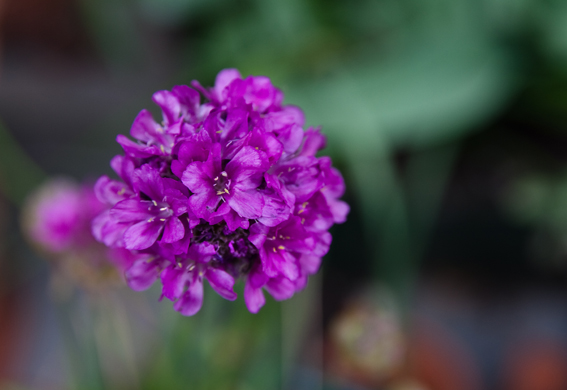
Showing posts with label spring. Show all posts

Tuesday, 22 April 2014

Lighter food for lighter, brighter days


Fresh and light and satisfying
With the improving weather – thank goodness we’re actually having a spring this year! – comes the desire to eat differently; lighter.

And it’s also the perfect time to try a few new things.

There have even been days, with real sun streaming down, when it was the perfect opportunity to pull out the salad spinner and rinse off some organic lettuce and winter purslane, and serve a huge plate of both, drizzled with virgin oil and a thinner balsamico, and topped with cheese.

Blue cheese suits such a dish perfectly, but in La Bouche earlier recently, I’d tried one that was new to me.

Beenliegh is an unpressed, soft blue from Devon, made from organic, unpasturised ewe’s milk. It’s creamy and moist, and beautifully fresh and subtle.

Get the right ingredients sourced and food doesn’t have to be complex to be very good.

A number of evenings recently have seen a dinner that was, if not a direct recreation, then was certainly inspired by a Jamie Oliver salmon dish that I’ve recently discovered.

He takes halved waxy potatoes and quartered fennel bulbs and boils them for six minutes, before draining and drying over the steam.

Salmon with fennel, sweet potato and herbs
Then they go in an oven-proof dish with olive oil, parsley, mint and garlic for something like half an hour, before the salmon – with more of the herby-garlicky mix on it – is placed on top and it goes back in the oven for a further 15 minutes.

It’s a lovely, easy dish, but I think a couple of tweaks help.

Set your oven to 180˚C (fan) and prep the fennel as above, not cutting off the base so that the pieces hold together. Retain the fronds.

Finely chop your mint, flat leaf parsley and garlic, and mix with plenty of olive oil.

Jamie’s version sprinkles the herbs and garlic over everything and then tops with oil, but I think that my way does two things: allows you to coat the ingredients more thoroughly and also reduces the chances of the garlic getting a tad burned.

So, pop in your fennel pieces and mix, and then add some sweet potato that has been peeled and cut into large chunks, instead of potato.

Gently stir around to coat everything. Season with good quality celery salt (my addition) and pop in the oven.

Lovely wild garlic
After 30 minutes, place your salmon fillets on top of the vegetables, scooping some of the oily, herby, garlicky mix on to the top.

And back it all goes for another 15-20 minutes, depending on the thickness of the fish.

Serve with a good squeeze of fresh lemon juice and some black pepper, and topped with the chopped fennel fronds.

The advantage of swapping the potato for sweet potato is that the latter is a vegetable rather than a starchy carb, so it makes the dish a two-portion one rather than having just a single portion.

Mind, if you use lashing of garlic and herbs, those add up too.

Anyway, it’s easy. And tasty – and healthy.

A couple of stalls on Broadway Market also had wild garlic last week, so I grabbed a good handful of that while the opportunity was there.

The English asparagus is here
Later, the leaves were shredded and blitzed together with some spring onions, chives, garlic, pine nuts, a little salt and a teaspoon of sugar, with enough olive oil to give you a good pesto consistency.

You could add parmesan, but I don’t, since The Other Half doesn’t like cheese.

And an ideal way to use some of this lovely stuff – which keeps well in the fridge in a jar – is to cook some pasta, drain and return to the pan, adding some of the pesto with a little double cream and re-warming gently.

You won’t need to use a lot of the pesto – it packs a serious punch.

Serve with fresh asparagus and peas and plenty of freshly-ground black pepper, and if you want, more parmesan.

A perfect, fresh and seasonal dish for a midweek supper.

And on a final note – and a slightly different one: this is worth reading about the cost of asparagus from Peru.

Ignore the slightly puritanical tone of  “lust for this luxury vegetable” etc, but the point remains that there are severe environmental issues created by a global market for a cheap, seasonal vegetable, sent half way around the world to fill – or create – consumer demand outside our own season.

Tuesday, 7 May 2013

Sunlight and geekiness


Belis
If not quite the uninterrupted sun that, until the early hours of the morning, the BBC had been consistently forecasting for several days, but nonetheless, Monday turned out to be the best bank holiday in ... well, for quite some time.

And one nurses a hope that the weather itself realises just how much we need a proper, sustained period of good weather.

Windows were pushed open even before people had seriously decanted themselves from slumber; wood creaking and spraying around the accumulated dust and grime of some eight months of being closed against the gloom and damp and cold.

Sunday had seen a bout of serious tidying in the garden, with bedding plants packed in around the lemon tree, whose surrounding soil, naked against the forgotten heat, was drying out too quickly.

Ever-reliable violas, purple with a yellow face; sweet William, yet to flower, and belis, in delicate strawberry and cream garb.

The tidying produced a number of small snails, all instantly crushed and disposed of. The campaign starts early this year and with some knowledge to begin this struggle.

Dying tulip.
Frankly, much of the rest of the weekend has been spent in sitting outside, writing. Which is partly what a garden should be for.

And yesterday, The Other Half cooked springbok steaks and boervors over a fire, to be served simply with a bread roll and good mustard.

The first braai of the year was consumed with relish. Otto rushed back through the gate the moment it was ready: she may have a smaller appetite than the other cats, but her ears are perfectly attuned to the sound of food being served and what she lacks in appetite, she more than makes up for in the gourmand stakes.

All three of the cats relished a day when they could potter around, in and out of the flat as they pleased, for the best part of eight hours.

Belis.
If you get your hands on any springbok, then like deer, it’s very lean and needs handling with a little care.

The Other Half rubbed olive oil into these and left them between plates, at room temperature, for some time before cooking.

And then, as always, you don’t cook over actual flames, thus reducing the chances of the Great British Uncooked Sausage Syndrome.

It’s actually difficult to get your head around just how quickly the weather has changed.

Just a couple of weeks ago, the nights were still dipping close to or below freezing, and bed was a place to snuggle down into.

Now, as if somehow we’ve had the whole of a conventional spring wedged into that intervening two or three weeks, the temperatures are well up and, at night, it’s almost a question of throwing back the covers to keep from getting over hot.

Violas.
Has there really ever been a winter-spring like it?

And almost as suddenly, everything is in – or coming into – flower and leaf.

One week out of the country and the silver birches in the carpark were suddenly green – and even the planes, always late to turn green, are now close to it.

And even the dying flowers have their own beauty – something that I tried to capture in a brief photographic safari around the garden.

In such conditions, surely spring cleaning is inevitable?

Purple.
I did some – well, sort of: assuming you can call attempting to tidy my iPod and iTunes ‘tidying’ and don't expect something more akin to Mole's efforts in Wind in the Willows.

It was mostly a question of trying to impose some order onto the rather grotty new version, which seems determined to create chaos, particularly in my large (and growing) classical music section.

This, geeky as it sounds, also brought about my ranting moment of the weekend, as I tried to change details and import cover art, which the present system seems remarkably reluctant to do all by itself.

And when you’re scrolling through an iPod, having cover art is a nice, helpful way of identifying what you have and what you want.

And, oh goodness – more of it this evening.

Okay, it's not just the software developers' problem – it is quite astonishing just how many albums appear to have a choice of four or more lots of data when you're importing them.

Then, of course, there is no consistency in the basic labels are arranged: for instance, some stuff comes in as R Strauss, while others come in as Strauss (R). But this rather screws with any hopes of an ordered list.

The solution, then, is to change the data, but the new version of iTines seems intent on making it more difficult to find and then fully highlight the required album. And this is a long-term project to digitise and organise the whole of a rather large collection.

Technology – wonderful when it works, and a complete pain in the proverbial when you find yourself struggling with it!


Saturday, 4 May 2013

Rites of spring


It has been a rite of spring for some years: the moment when the grapevine relates the news that – whisper it with reverence – the first Jersey Royals and the first English asparagus of the season are available.

The pilgrimage is then undertaken to Borough Market, which is guaranteed to be the first place where I’ll be able to find these reminders of the joys of seasonality.

Admittedly they won’t be cheap, these first specimens, but they go beyond simply being food and into something special: they are the first concrete statement that spring is with us and there is no turning back.

Last year, that pilgrimage came at the very end of March.

In 2011, it was in mid April. The year before? Within a few days of that. In 2009 – 10 April.

Last weekend – in the very dying embers of April – some asparagus was available on Broadway Market, but it was poor.

So when The Other Half took the day off yesterday, since he was contemplating a braai for this weekend, I gently hinted that he should make the journey to London Bridge, where he could obtain boerewors from the South African speciality shop underneath the station – and then head into Borough Market itself to track down these seasonal joys in these unseasonal days.

That’s more than a month later than the earliest occasion in the last five years, and a good three weeks later than the latest. Which tells you a great deal about just how bad this spring has been – or perhaps more accurately, how long winter was.

Last night’s meal, of simply grilled lamb chops, with homemade mint sauce (a bundle of mint, leaves picked and blitzed briefly, with a pinch of salt, a good pinch of sugar and red wine vinegar to bring together), boiled Jerseys, and fine beans with English asparagus, butter and good salt, was more of a real celebration than anything that Easter could offer.

It had, instead, real, serious pleasure in the seasonal meaning that came with it: tastes and textures and colours that are utterly those of the spring.

This early in the season, you pay a premium, but by Odin, it’s worth it.

Today, on Broadway Market, the asparagus was much improved and Mark had organic Jerseys. The young lad serving me took my rather full bag and pointed out, slightly nervously, that it was not cheap.

Oh, I knew that. But sometimes you just have to do such things – and my soul has been crying out for this for weeks.

This is my rite of spring, no less. And such things have importance.

Not that it’s the only rite of spring I’ve been paying attention to recently.

For the last week I’ve been doing a job that requires concentration and patience, yet does not occupy the mind fully.

There are times when sticking headphones on and listening to music aids concentration anyway, but with this, it’s done that – and yet there has still been enough brain space left over to actually appreciate the music.

Since I’ve also been reading Bryan Magee’s excellent short book, Aspects of Wagner, old Dickie has featured rather heavily: various bits and orchestral pieces, a disc of tenor Jonas Kaufmann singing various arias – and the whole of Das Rheingold (Solti and the Vienna Phil).

But this also made me want to go back and revisit other composers – first, Berlioz, because I recalled a similar gut reaction to part of his Symphone Fantastique as I get with Wagner; and second, Stravinsky, because I wanted to see whether The Rite of Spring in particular produced a similar, primal response.

Well, I was essentially correct in what I remembered of the Berlioz (who was obviously influenced by Wagner). At least it was the certainly the case in the fifth and final movement, Dreams of a Witches' Sabbath.

In the case of Stravinsky, Magee says that he was one of the very few post-Wagner composers who was not influenced by him (although he notes that Stravinsky’s teacher, Rimsky-Korsakov, had a picture of Wagner in his study).

But if one key aspect of Wagner’s music – and one of the things that disquiets some people – is that it gets you in the gut, as well as being cerebral, then the same can most certainly be argued of Stravinsky’s ballet.

A century old this year, its Paris premiere caused a riot. We Brits, of course, merely got a bit noisy, but it still upset the first London audience a few weeks later.

Now it’s entirely feasible that the prime cause of outrage was the choreography of Ballets Russe director, Sergei Diaghilev.

It is an idea of spring that is far from a European pastoral one: indeed, its subtitle, Pictures of Pagan Russia in Two Parts, leaves no doubt that this is far from any Christianised vision.

Let’s face it – a young woman is chosen as a sacrifice and dances herself to death.

But the score itself must have been equally as startling for the first audiences – and even today it has a power that goes beyond concert hall politeness. It too aims for the gut; for the primal, for instinct within us.

In that sense, Stravinsky was following in Wagner’s footsteps, taking music yet further away from the church and from established religious conventions – and shocking audiences in the process.

I’ve been listening to two versions, trying to compare and hear the differences: first up is Kent Nagano and the London Symphony Orchestra, and then Simon Rattle’s centenary recording with the Berlin Philharmoniker.

So much of the piece suggests the angular and sharp that it’s easy to forget that there are passages of lushness that suggest a debt to Debussy, even though this is a long step beyond the sensuality of the French composer's Prélude à l'après-midi d'un faune.

I can hear differences between the two recordings, right from the greater vibrato on the opening bassoon passage in the Rattle. And there are other moments where this new version seems to have layers to the sound.

It’s a good listening exercise.

And after that, it’s back to my own little culinary rite – which is probably every bit as pagan in its adoration of seasonality: more Jersey Royals, scraped gently to leave them in all their ivory glory.

Tonight, they accompanied some fillets of brill, which had been dredged in plain flour and paprika, before being pan fried in butter.

Keep them warm and deglaze with sherry vinegar or dry sherry, before adding orange juice and boiling quickly to reduce.

Serve with chopped chives and, optionally, toasted slivered almonds.

You can easily do much the same with any whole fish, including cod or pollock, simply adjusting the cooking time.

These are the tastes we’ve been hankering for for what feels like an eternity.

And on a day that has encompassed sun, wind, rain and even hail – as though this were March and April rammed into a single 24-hour timeframe – they are tastes that remind you that spring really has arrived and that there is no turning back.


Tuesday, 30 April 2013

A purple patch


The return to London and everyday life was softened – not inconsiderably – by the improving weather. Or perhaps more accurately, by what a week of improved weather had done to the garden.

Bright red tulips were in flower, along with gloriously rich purple ones, a purple chive-like flower whose name I cannot recall, purple cape daisies and a mass of cornflower blue anenomes.

It's a veritable purple patch.

The mint, which I had moved away from the most direct sunlight, is looking better than it ever has, and the sorrel has begun producing its first new leaves, bright, fresh green with a red vein, while the curly parsley is looking healthier than ever.

Within a few days, the first nasturtiums, which I’d sown just before I went away, were popping their heads above ground.

The vine had been planted, like much else, just a year ago in March (in a heatwave, for goodness sake), but had entered winter looking brittle and dried and dead.

However, last year provided learning exercises in the extraordinary power of plants to revive, and so it has now produced a reminder, with the vine now having some 14 buds, with the ones nearest the top starting to open as the sun makes regular appearances.

The pyracantha has produced delicate new leaves and the first signs of its tiny flowers, while the rose, so sternly pruned back once again, is almost unimaginably suddenly a mass of glossy green, and the oh-so-delicate pink petals of the first clematis buds are just beginning to open.

In the grow house, the two remaining pea plants from the earlier 'boiling' debacle have come on in leaps and bounds and have spent the last week being hardened off. A third one, which I sowed just before my trip, has sprouted, along with three runner beans. And three broad beans are on just visible in their pots.

The rest of the grow house story is a mixed one.

Runner beans.
I may well have to give up on growing tomatoes, strawberries and chillies from seed this year – the erratic weather has done my embryonic knowledge no favours.

But out at the potager, the turnips and the most recent sowing of carrots have finally germinated, while peas that had taken six weeks to even pop their heads above ground are now making steady progress, and two broad beans had emerged too.

And under a canopy of gorgeous pink blossom, the blackcurrant bush is in lush leaf and busy producing buds.

So the weekend demanded that I get outside and do some gardening.

First was weeding – I mention this again simply because it’s worth reiterating that you can do it without pain and without chemicals. One Dutch hoe, the potager and around 15 minutes. All done – no backache. Two weeks of sudden spring growth sorted.

But this subject means it's also worth mentioning what happened yesterday, when the EU acted to ban neonicotinoid pesticides.

A massive step forward, but also one with dangers, given that manufacturers will look to create alternatives – and users may restart using older products that are hardly less 'green'.

Another point worth noting is that the UK government voted against any such ban – its prime constituency remains big business, and big business is not happy at this.

A comment I saw on a forum yesterday observed that, at some point, scientists may be able to create all our food without pollination. But I wonder: why would you want to? Why would that ever be a good thing?

Anyway, I remain a chemical-free gardener – and trust me, I'm not the most energetic. So if I can do it ...

You get the gist, I hope.

The next most urgent task was to sow out the oldest two pea plants from the grow house into the potager and add further copper rings to protect them.

I’d already erected the basic wigwam for the peas and put a bottom row of string around it. By yesterday, the largest of the transplanted peas had wound its first tendrils around the string.

The thing with the copper, as I understand it at present, is that you have to ensure they’re firmly in the ground – I’ve pressed soil against them both on the inside and out – so that nothing can get underneath, and that no plant flops over or debris provides a bridge across it.

Boudi thinks about chasing Basil.
But like so many things, if you check regularly, it’s a matter of moments. And in the battle against slugs and snails, it’s the best basic tactic – so I’m told.

Much remains to be done – and some new planning is in order as I work out what to do with the dead and dying bulbs, and what I actually want to plant on the patio for this summer.

The lemon tree needs some bedding plants around it quickly, to give some protection to the bare soil that loses moisture so rapidly.

It’s recovering now from the long months under a fleece, but given it’s position right against a wall, it probably didn’t get enough moisture during that time – something that I hadn’t fully appreciated and that needs to be remembered for next winter.

Beyond the garden – and the carpark – trees seem to springing suddenly to life; green is everywhere, and people are flooding out of their workplaces during the day to sit outside. The relief is obvious and widespread.

The cats are all pleased too – Boudi is managing almost daily patio rolls on the warmed concrete every time that I let them out.

She's also enjoying being able to see of Basil and Reggie – the carpark's two 'visitor' moggies – and, in general, behaving not remotely like a cat who is on the cusp of 'senior' status.

Otto and Loki are also revelling in being able to re-explore the spots they discovered last year.

So here’s hoping that we get enough of both a (late) spring and a summer to build us all back up after such a dismal start to the year. We all really need it – cats and plants included.

Monday, 8 April 2013

Tempestuous weather leaves gardening in a whirl


An anenome finally opens on the patio.
How many fingers can you cross? And is it possible that crossing some toes too will add to the effect?

The weather pepped up over the weekend. It wasn’t a heat wave, but there was enough warmth to give hope that my bones will feel warm sometime soon.

And enough warmth to make you very aware that the warming of the sun on you skin is very, very different to the warming of central heating.

Such an improvement was also just in time to be able to sit outside and appreciate the results of the bulb planing that we'd done last autumn.

The question, as always, is whether it lasts, but the forecasts are looking more optimistic, at least in terms of temperature.

Spot the healthy ones.
It had been a crazy week. Last Tuesday, I got home to find that the sudden sun that day had boiled most of my seedlings in their propagating trays. Most was gone – it remains to be seen whether any of the peas and broad beans recover. I’m holding out faint optimism for one or two at most.

At least there were two small pea plants – the smallest and poorest, it had seemed – that were outside the trays waiting for the extra coir pots needed for repotting, and thus didn’t suffer. They look so healthy by comparison now.

And then, just 48 hours after that, a blizzard hit. Oh, it didn't stick, but the snow was teeming down, swirling around in the wind, obliterating the nearby St Pancras and British Library.

All this while early mornings would, whether bright or gloomy, reveal frosted car roofs.

How on earth do you judge whether to try to harden off plants or open the propagator vents or do anything when the weather is so utterly all over the place?

Grazing sheep at Hackney City Farm.
It is a learning curve – and then some.

As young plants succumbed to massive stress and shock, the leaves of the broad beans turned from vibrant green to grey, and everything else wilted, it felt soul destroying, having judged so well until that moment.

But you have to get right back into the saddle, as they say after a throw, so on Saturday, with the sun at my back once more, I sat down and sowed two more full cell trays.

One was made up of salad vegetables – I’m going to leave radishes and spring onions until I’m back from my brief trip, and then sow them straight into pots – but included two varieties of lettuce, plus more chard.

The second tray was all tomatoes and chilies, of which there have been no sign in the earlier attempts.

Red leaves catching the sun near Columbia Road.
I read somewhere that the entire country is about five weeks behind usual growing times, so perhaps those first ones may yet geminate, while the new sowing should have a much better chance as the temperature seems to be stabilising.

Yesterday, a pleasurable wander down to Columbia Road allowed to to pick up some more fibre pots for potting on.

And alongside the one pea that I sowed to make a trio with the two healthy plants (a Kelvedon Wonder), I added three broad beans (Witkiem Manita) and three runner beans (St George).

All are sitting on trays – but are not in propagators. Let’s see what happens.

Primula on Columbia Road market.
Also yesterday, I added another row of carrots into the potager – there is no sign of anything pushing up from the first sowing, but as with the tomatoes, they may now appear.

And alongside this now sits a row of turnip seeds.

The revelation of the weekend – of the week, indeed – was the discovery of three tiny pea shoots in the potager, just pushing through and unbending to reach the light.

Sown five weeks ago, I was beginning to doubt that any of them would germinate, but it provides yet more evidence for just how tough and resilient plants can be.

They now have a wigwam erected around them – with space for several more plants – and are themselves encircled by strips of copper to (hopefully) help keep the slugs off as they grow bugger and juicier.

Joyfully able to revel in the weather, I also spent time clearing the space in the pot holding the vine, together with the hanging basket, and sowed substantial amounts of nasturtium.

Potager with added wigwam. And car. For context.
That will keep things ticking over for a few days, I think.

But with the forecast suggesting – finally – that temperatures are approaching a seasonal norm and, most importantly, not plunging below freezing almost every night, gardening matters might finally be looking up.

And the lesson of the lost beans and peas must be that, once leaves appear, open the vents.

As a wise man once put it: living is learning. And the same goes for gardening.